


Meat is essentially the most concentrated supply of protein your physique can digest, and for runners that protein does greater than construct muscle.
That protein additionally comes packaged with iron for oxygen transport, B12 for vitality, and the amino acids your muscle tissue rebuild with.
The query most runners have is just not whether or not to eat meat. It’s which meats provide the most protein and iron per serving, and find out how to match them round your coaching.
Every sort brings one thing totally different to a runner’s plate, so your best option relies on what your legs want that day.
Right here’s what you’ll be taught:
- How a lot protein runners want every day
- Why beef is the strongest decide for iron and B12
- How rooster and salmon evaluate for lean protein and restoration fat
- How a lot meat to eat at a meal, and when
- Whether or not you possibly can run proper after consuming a steak
How A lot Protein Do Runners Want Every Day?
Runners want extra protein than the usual well being guideline, as a result of arduous coaching breaks down muscle protein that your physique has to rebuild.
The overall advice for adults is 0.8 grams of protein per kilogram of physique weight per day, and endurance tips have lengthy put runners at 1.2 to 1.4 grams per kilogram.
A study of endurance-trained men measured their protein wants on the day after a 20 km run and located the requirement reached about 1.65 grams per kilogram of physique weight, greater than the older 1.2 to 1.4 gram goal.
For a 70 kg (154 lb) runner, that’s roughly 115 grams of protein a day throughout arduous coaching.
Meat is without doubt one of the best methods to achieve that complete, as a result of a single serving delivers 20 to 30 grams of full protein with all of the amino acids your muscle tissue want.
A single serving additionally delivers about 2 grams of the amino acid leucine, the swap that activates muscle protein synthesis after a run.
RunnersConnect Bonus
Obtain our FREE restoration meals information, with the highest 10 meals for every of the important restoration nutritional vitamins, minerals and macro vitamins. Plus a pattern 1-day meal plan!
Is Beef the Greatest Meat for Runners?
Beef is the strongest alternative when your aim is iron, and iron is the nutrient runners lose most simply.
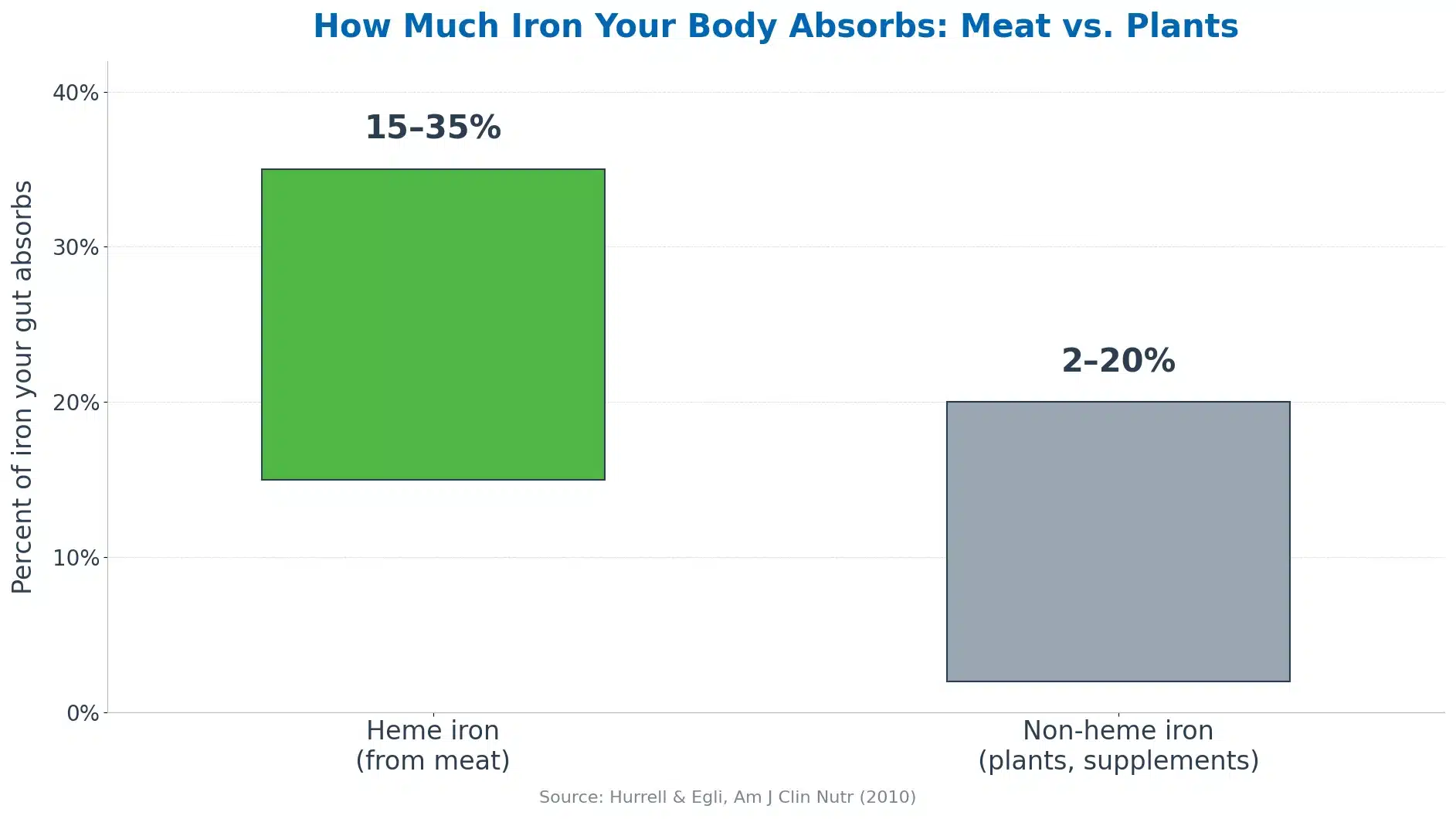
The iron in crimson meat is heme iron, the shape your intestine absorbs much better than the iron in crops or dietary supplements.
Your physique absorbs roughly 15 to 35% of heme iron from meat, in contrast with 2 to twenty% of the non-heme iron in crops and fortified meals.

Runners want that simply absorbed iron as a result of arduous coaching drains iron shops a number of methods directly: foot-strike influence breaks down crimson blood cells, sweat carries iron out, and every arduous effort raises the hormone hepcidin, which blocks your intestine from taking in iron for a number of hours.
A review of iron in athletes discovered that iron deficiency is extra widespread in endurance runners than within the basic inhabitants, and low iron exhibits up early as flat, heavy legs.
A 3 oz (85 g) serving of lean beef provides you about 25 grams of protein, 2.5 mg of iron, and most of a day’s B12 and zinc, which your physique makes use of for oxygen transport and restoration.
Leaner cuts like sirloin, flank, and 93% lean floor beef provide you with that nutrient payload with out the saturated fats of fattier cuts.
In case your legs have felt heavy for weeks, our information to iron deficiency in runners walks via the ferritin numbers to examine.
Is Rooster or Salmon Higher for Runners?
Rooster and salmon are each wonderful, and so they clear up totally different issues.
A skinless rooster breast is the leanest approach to hit a excessive protein goal, with about 26 grams of protein in a 3 oz (85 g) serving and little or no fats.
Rooster and beef carry virtually the identical quantity of protein per serving, so the true distinction is the iron, B12, and zinc that beef provides.
That makes rooster the on a regular basis workhorse for runners who need protein with out the fats load, and turkey breast works the identical method.
Salmon trades slightly of that leanness for omega-3 fat, the identical fat linked to decrease irritation after arduous coaching.
A review of trials on omega-3 supplements discovered a small discount in muscle soreness after arduous train, so salmon is a helpful protein supply in your heaviest coaching days.
A 3 oz serving of salmon provides you about 22 grams of protein plus vitamin D, which most runners fall quick on via winter.
What About Pork and Turkey?
Pork and turkey spherical out the record of lean, runner-friendly choices that hold your meals from getting repetitive.
Pork tenderloin is sort of as lean as rooster breast, delivers about 22 grams of protein per 3 oz serving, and is without doubt one of the richest meals sources of thiamine, a B vitamin your physique makes use of to show carbohydrate into vitality.
Turkey breast matches rooster virtually gram for gram on protein and stays simply as low in fats.
The desk under exhibits how the principle selections evaluate per 3 oz (85 g) cooked serving.
| Meat (3 oz cooked) | Protein | Iron | Greatest for |
|---|---|---|---|
| Lean beef (sirloin) | ~25 g | ~2.5 mg | Iron, B12, zinc |
| Rooster breast | ~26 g | ~0.9 mg | Lean on a regular basis protein |
| Turkey breast | ~26 g | ~1.2 mg | Lean on a regular basis protein |
| Salmon | ~22 g | ~0.5 mg | Omega-3s, vitamin D |
| Pork tenderloin | ~22 g | ~1.0 mg | Lean protein, thiamine |
Can You Get Sufficient Protein With out Meat?
You’ll be able to hit your protein goal with out meat, however it takes extra planning.
Eggs, dairy, tofu, tempeh, beans, and lentils all provide protein, and Greek yogurt or a giant serving of lentils can match a meat portion at a meal.
Vegetarian runners have to observe 2 vitamins specifically, iron and B12, since each are best to get from meat.
Plant iron is the poorly absorbed non-heme type, so pair beans and greens with a supply of vitamin C like peppers or citrus to assist your intestine take it in.
Vitamin B12 comes virtually solely from animal meals, so runners who keep away from meat and dairy want a complement or fortified meals to guard vitality manufacturing.
How A lot Meat Ought to You Eat, and When?
The quantity issues lower than the way you unfold it, as a result of your muscle tissue can solely use about 20 to 40 grams of protein for restore at one sitting.
The International Society of Sports Nutrition recommends 1.4 to 2.0 grams of protein per kilogram per day for energetic folks, break up into meals of roughly 20 to 40 grams.
A 3 oz serving of most meats provides you 20 to 40 grams of protein, so one palm-sized portion per meal covers it.
Consuming a protein serving inside a few hours of ending a tough run provides your muscle tissue the amino acids to rebuild whereas restore is quickest.
Spreading your protein throughout 3 or 4 meals repairs extra muscle than saving all of it for dinner.
Runners who prepare twice a day or carry on prime of working want the upper finish of that vary, nearer to 2.0 grams per kilogram.
Can You Run Proper After Consuming a Steak?
Working proper after a steak is a quick path to a aspect sew or a heavy, sloshing intestine.
Protein and fats each sluggish how rapidly your abdomen empties, so a steak sits in your intestine far longer than a bowl of oatmeal.
Throughout a run, blood that might usually deal with digestion will get diverted to your legs, which leaves that meal sitting there.
A review of gastrointestinal problems in athletes discovered that high-fat, high-protein, and high-fiber meals earlier than train increase the chances of cramps, nausea, and different intestine signs.
Give a full meat-based meal 3 to 4 hours to digest earlier than a tough run or race.
Save meat to your restoration meal after the run, and hold pre-run meals to straightforward carbohydrate like toast, a banana, or oatmeal.
In case your abdomen activates you mid-run even with no steak, our information to stomach pain when running covers the opposite triggers.
